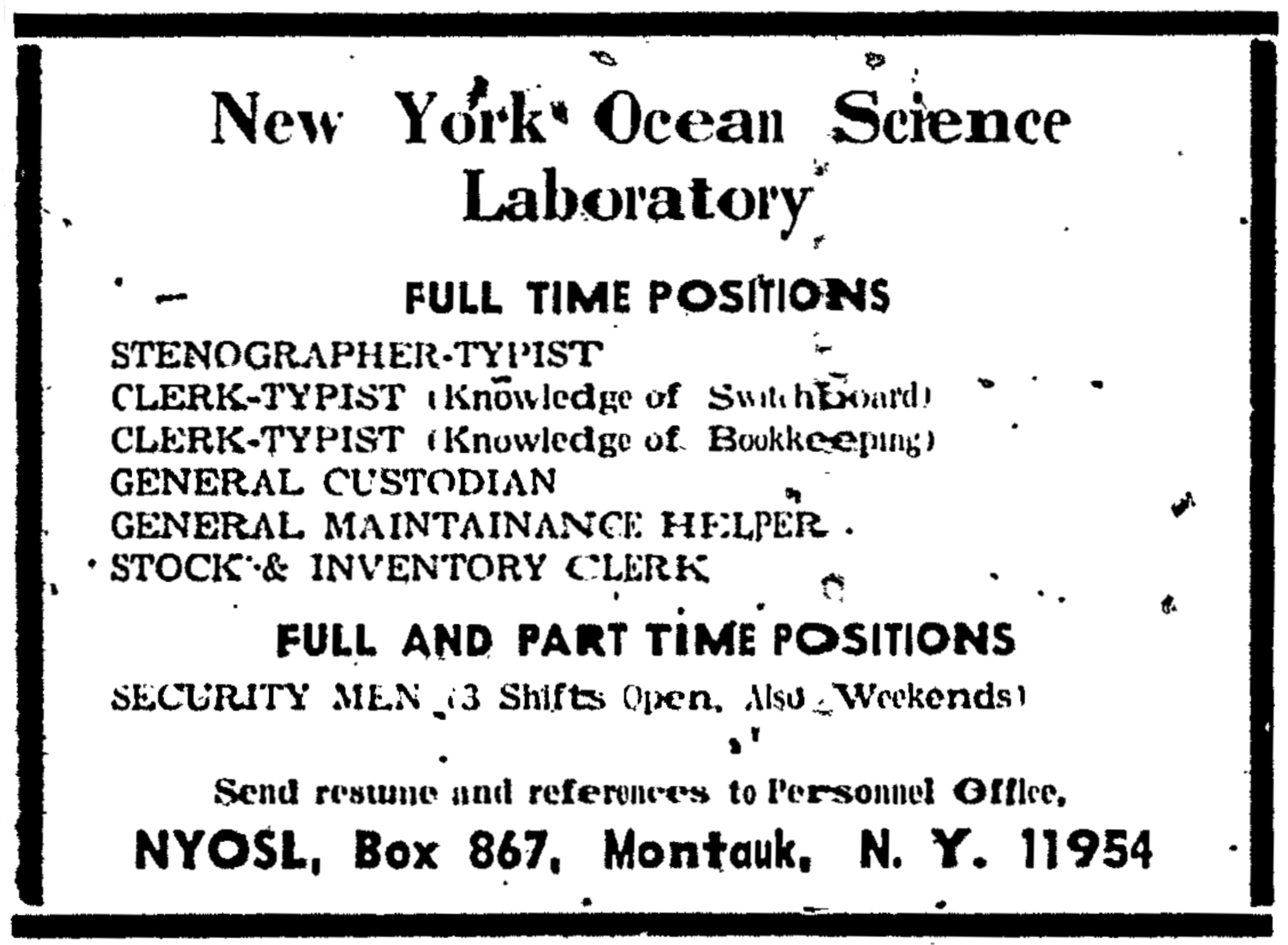
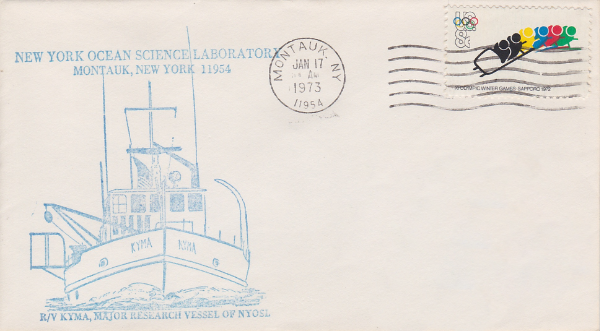
“(Artemia nyos) NYOS is an acronym for New York Ocean Science Laboratory, the birthplace of HYBRID Sea-Monkeys.”
We have seen that line of information in Sea-Monkeys packaging for decades, and while Artemia NYOS is just a marketing term, and not an officially recognized brine shrimp specie, the New York Ocean Science Laboratory (NYOSL) in Montauk, Long Island, was indeed a real location where marine research took place in the 1970s, and where one specific marine biologist perfected the Sea-Monkey formula.
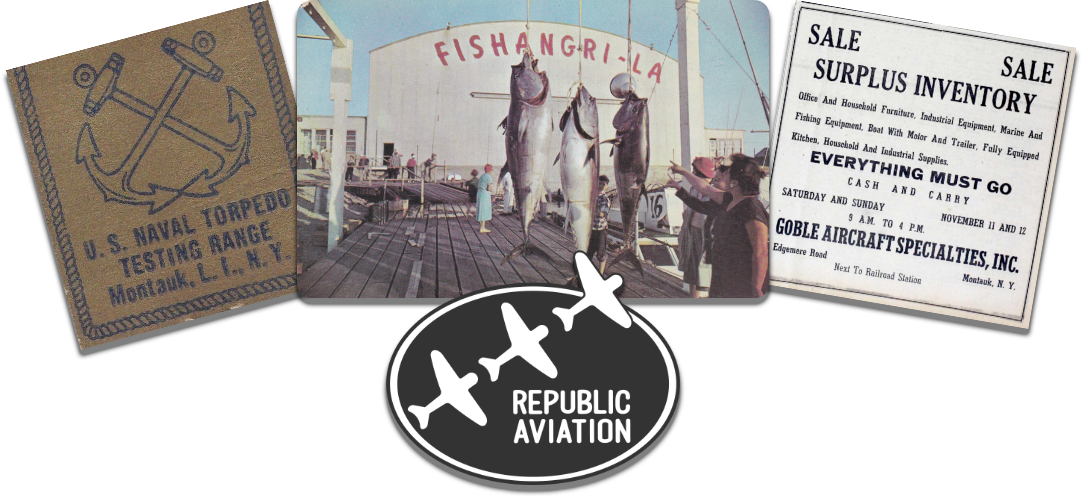
The facilities that would eventually become NOYSL were located on the shores of Fort Pond Bay, and their history dates back to World War II, when the United States Naval Torpedo Testing Range, Montauk, was established circa 1942.
After the Second World War ended, the facilities were left unused for a few years until a businessman named Gene W. Goble of Goble Aircraft Specialties rented the location for production and storage. In that same property around the bay, Goble opened Fishangri-la, which for a few years offered amenities for boat aficionados and fishermen.
With the start of the Korean War, Republic Aviation started renting spaces from Goble Aircraft Specialties for their own production and storage of parts. After the Korean War ended, and having bought the place from Goble, Republic Aviation maintained and expanded its presence in Montauk for a few years, until the facilities closure in 1964. In July 1965, Republic Aviation became defunct after being acquired by Fairchild Aircraft.
By 1966, talks to establish an oceanography center in Long Island were making the rounds. In 1967, a symposium was held to have a clear plan of what programs & research the institute would conduct. In 1970, the New York Ocean Science Laboratory opened its doors, and throughout its life, many academics representing various institutions conducted a wide variety of marine research in the area.
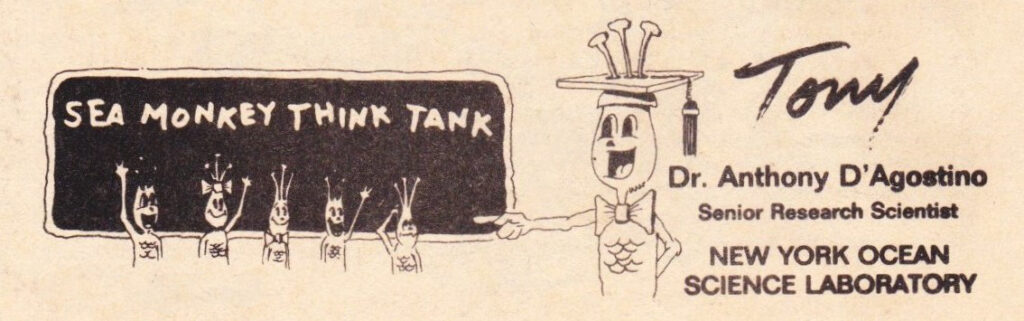
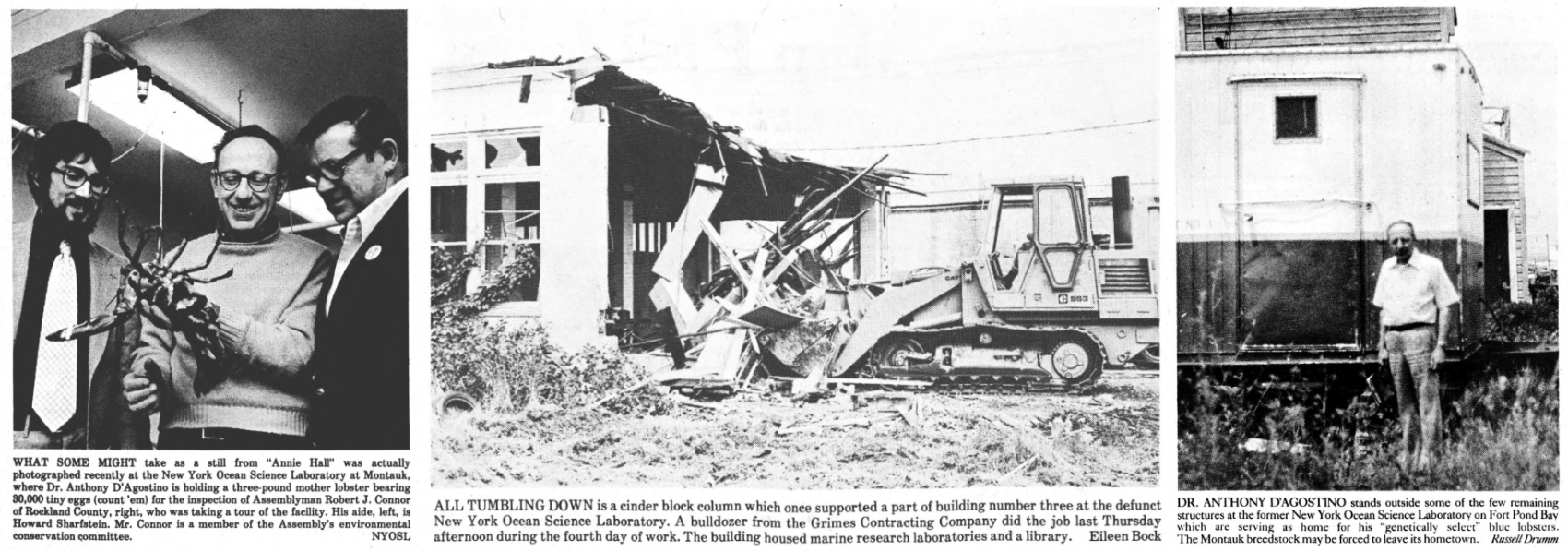
Dr. Anthony S. D’Agostino (1931-2017), representing St. John’s University, was one of those academics at the institute and one whose presence was a constant during NYOSL years of operation. At some point in the 1970s, he would come into contact with Harold Braunhut, the creator of Sea-Monkeys, who needed to improve the lifespan of the brine shrimp used in the Sea-Monkeys products. From this partnership, a new formula to make them heartier was developed, and the alleged hybrid Artemia NYOS was born.
While D’Agostino conducted marine research in many areas, any information concerning brine shrimp hybridization is not readily available. In part due to it being a business trade secret and the brand’s hyperbolic marketing, the nature of these alleged hybrid Artemia NYOS (Sea-Monkeys) will probably remain a mystery and continue to be a subject of debate among some enthusiasts.
New York Ocean Science Laboratory struggled with funding throughout its years, seeing a decline in employees by the late 70s. By the time it closed circa 1982, it only had two. In 1984, the area was cleared for a housing development.
In one of the few surviving buildings, D’Agostino eventually set up the Montauk Marine Science Institute, where he continued marine research and helped the brand with further improvements to the Sea-Monkeys formula.
On June 20th, 2017, at age 86, D’Agostino died due to natural causes.